Closing the water loop with NOAH Water Solutions
The challenge
Many homes and communities are still not connected to a sewer network. This is especially true in rural areas, where distances are long, settlements are scattered and building collection infrastructure is often too costly or technically difficult. Even where it is feasible, it can take decades.
Meanwhile, water scarcity is increasing the need for reuse, and stricter water-quality requirements are raising the bar for how wastewater is treated before it returns to the environment. Conventional sanitation still depends on sewers, centralised plants and biological processes, a model that simply doesn't reach these locations.
That calls for a different approach: treat wastewater where it is produced, and reuse it at the source.
The solution
NOAH Water Solutions is developing an electrochemical treatment platform for decentralised treatment of mixed domestic wastewater and water reuse.
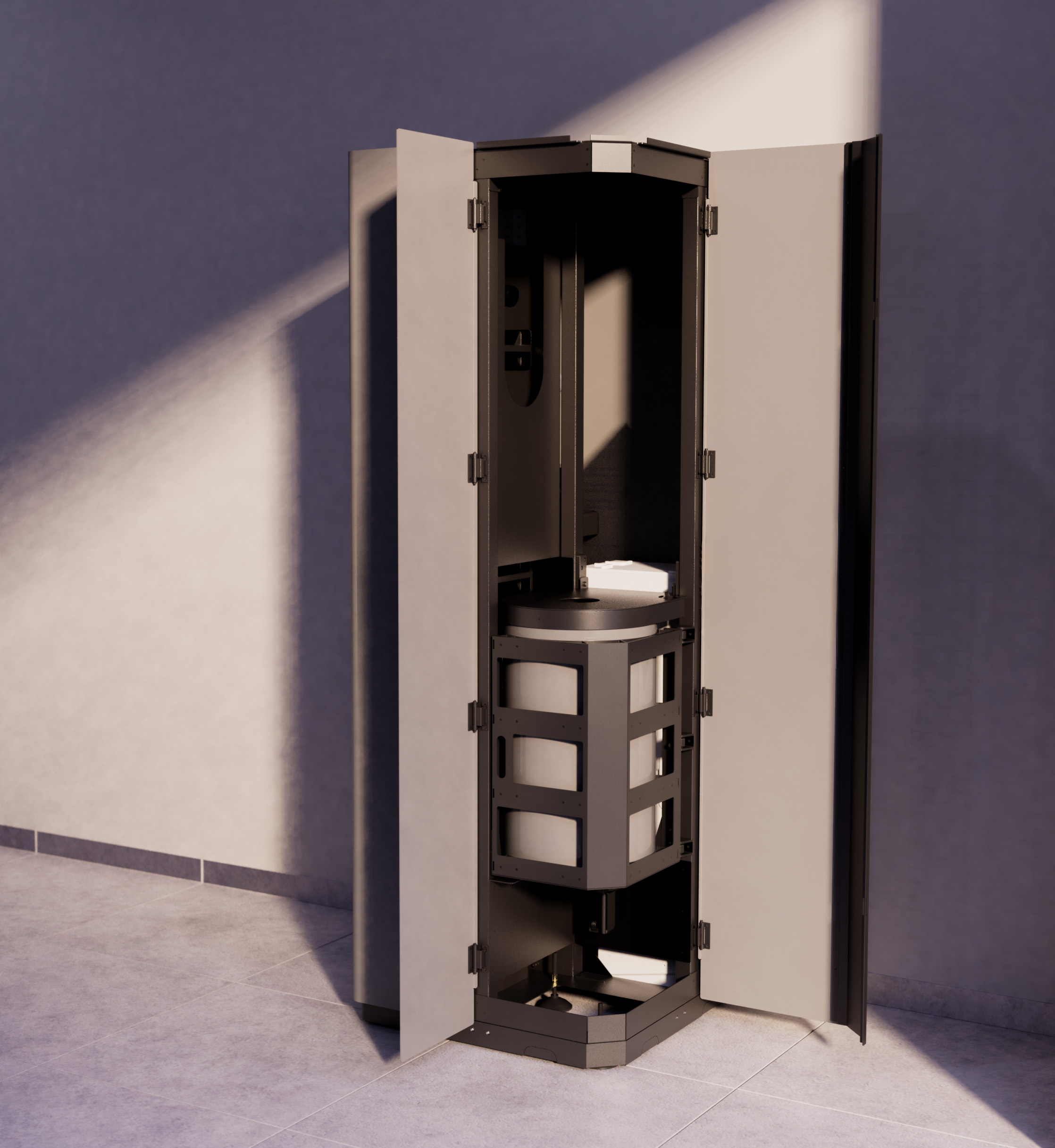
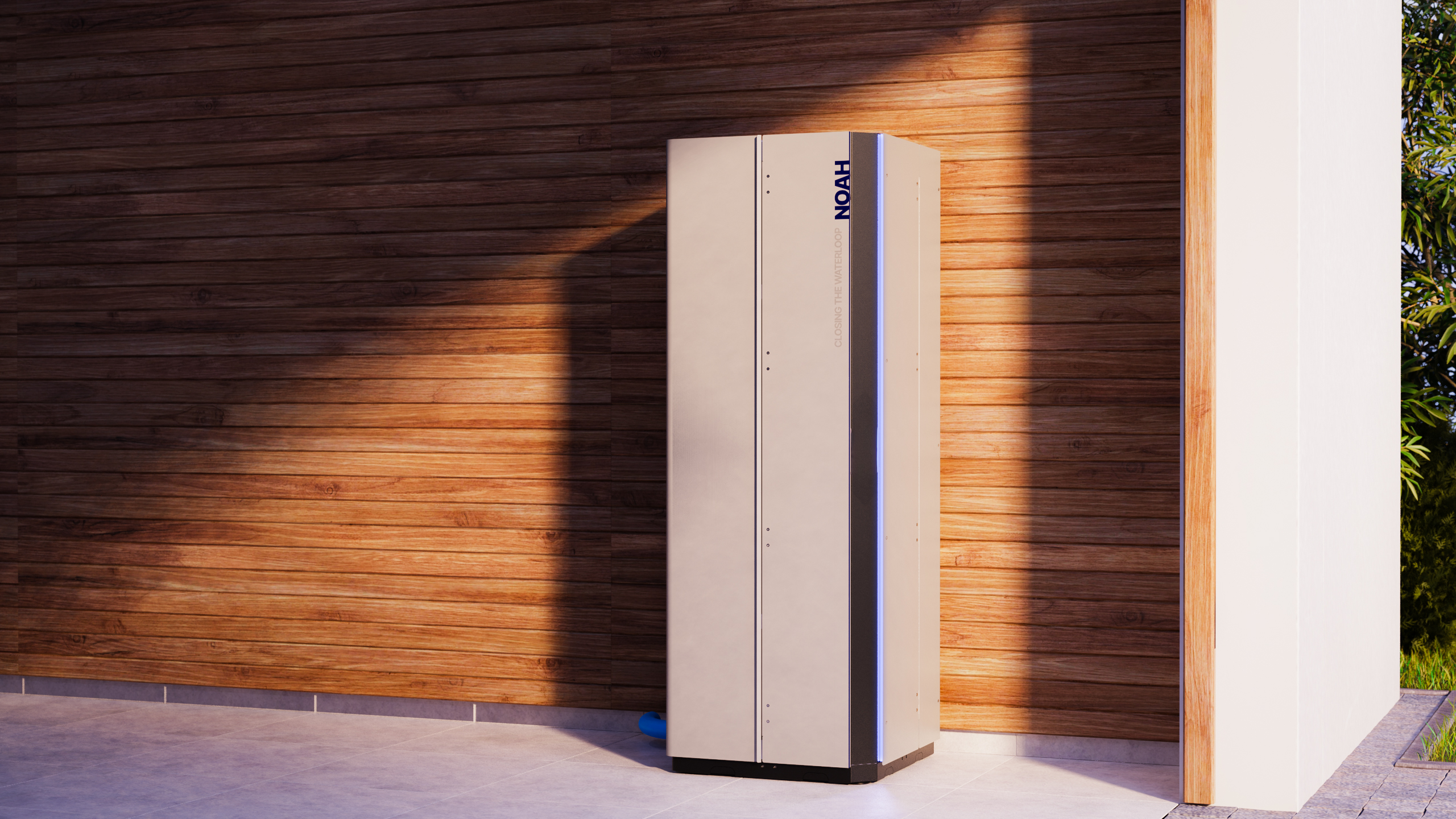
Instead of conventional biological treatment, NOAH uses electrochemical processes to remove contaminants. Its modular system combines several treatment steps in one compact unit and is designed to produce high-quality water suitable for non-potable reuse.
The technology is built for places that sewers don't reach: rural homes and small communities, off-grid buildings, and locations where building sanitation infrastructure is impractical. It also suits temporary and mobile sanitation.
Our ambition is to make local water reuse a practical part of tomorrow's sanitation infrastructure. By combining our electrochemical technology with the expertise and market reach of industrial partners, we can turn that ambition into scalable solutions.
One platform, multiple applications
At the core of NOAH's technology is a modular electrochemical platform. Treatment modules (electrocoagulation/flocculation and electro-oxidation) are combined according to the wastewater characteristics and the water quality required.
This lets the technology adapt to different sites and uses without designing a new treatment process each time. Smart monitoring and connected services are being developed alongside it. That matters in remote locations, where systems need to run reliably without frequent on-site follow-up.
Built for industrial partnerships
NOAH doesn't aim to become yet another manufacturer selling complete sanitation products in every market. It is building its technology as a platform that industrial partners integrate into their own sanitation and water-treatment solutions.
Through partnerships and licensing, manufacturers can add electrochemical decentralised treatment and water reuse to their existing range. For NOAH, it's a route to scale through established players, their manufacturing capacity and their market channels.
What convinced us is NOAH's potential to take decentralised water treatment to a new level of nutrient recovery. For rural areas without sewers, wastewater no longer has to be a problem to get rid of. It becomes a local source of reusable water and valuable resources. That is relevant across Europe, where many rural homes still rely on basic on-site systems, and just as much in the Global South, where large parts of the population will never be connected to a sewer network. We're excited to help NOAH bring that to scale.
The road ahead
NOAH is moving from technology development and pilot validation towards industrialisation and commercial deployment.
The next phase focuses on validating the technology in real-world applications, preparing the platform for industrial integration, and building partnerships with companies that want to add decentralised wastewater treatment and water reuse to their offering.
The long-term goal reaches beyond a single treatment unit: making decentralised treatment and reuse a credible alternative wherever sewers don't reach, and ultimately closing the water loop.